Diagram Of Electric Guitar embarks on an enlightening journey, providing a thorough exploration of the electric guitar’s intricate components and their contributions to its captivating sound.
From the essential parts to the diverse types, wiring diagrams, and modifications, this guide delves into the very essence of this iconic instrument, offering a comprehensive understanding for enthusiasts and aspiring guitarists alike.
Contents
Parts of an Electric Guitar
Electric guitars are a versatile and popular instrument, and their unique sound is due in part to their unique construction. The main parts of an electric guitar include the body, neck, strings, pickups, electronics, and hardware.
The body of the guitar is usually made of wood, and it houses the pickups and electronics. The neck is also made of wood, and it has a fretboard with frets that divide the strings into different notes. The strings are made of metal, and they are stretched between the nut at the top of the neck and the bridge at the bottom of the body.
The pickups are electromagnetic devices that convert the vibrations of the strings into electrical signals. The electronics consist of a preamplifier, which boosts the signal from the pickups, and a tone control, which allows the player to adjust the sound of the guitar. The hardware includes the tuners, which are used to keep the strings in tune, and the bridge, which is used to adjust the intonation of the guitar.
| Component | Function | Material | Diagram Reference |
|---|---|---|---|
| Body | Houses the pickups and electronics | Wood | [Image of guitar body] |
| Neck | Has a fretboard with frets that divide the strings into different notes | Wood | [Image of guitar neck] |
| Strings | Made of metal and stretched between the nut and the bridge | Metal | [Image of guitar strings] |
| Pickups | Convert the vibrations of the strings into electrical signals | Electromagnets | [Image of guitar pickups] |
| Electronics | Consist of a preamplifier and a tone control | Various | [Image of guitar electronics] |
| Hardware | Includes the tuners and the bridge | Various | [Image of guitar hardware] |
Different Types of Electric Guitars: Diagram Of Electric Guitar

Electric guitars come in a wide range of designs and constructions, each with its own unique sound and playing style. The three main types of electric guitars are solid-body, semi-hollow, and hollow-body guitars.
Solid-Body Guitars
Solid-body guitars have a solid body made of wood, typically mahogany, alder, or ash. They produce a bright, clear sound with excellent sustain. Solid-body guitars are the most popular type of electric guitar and are used in a wide range of genres, from rock to jazz to blues.
Some popular models of solid-body guitars include:
- Fender Stratocaster
- Gibson Les Paul
- Ibanez RG
Semi-Hollow Guitars
Semi-hollow guitars have a hollow body with a solid center block running through the middle. This gives them a warmer, more resonant sound than solid-body guitars, with less feedback. Semi-hollow guitars are often used in jazz and blues, but they can also be used in other genres.
Some popular models of semi-hollow guitars include:
- Gibson ES-335
- Fender Jazzmaster
- Gretsch White Falcon
Hollow-Body Guitars
Hollow-body guitars have a completely hollow body, which gives them a warm, mellow sound with lots of natural reverb. Hollow-body guitars are often used in jazz, but they can also be used in other genres.
Some popular models of hollow-body guitars include:
- Gibson L-5
- Epiphone Emperor
- D’Angelico Excel
Wiring Diagrams for Electric Guitars

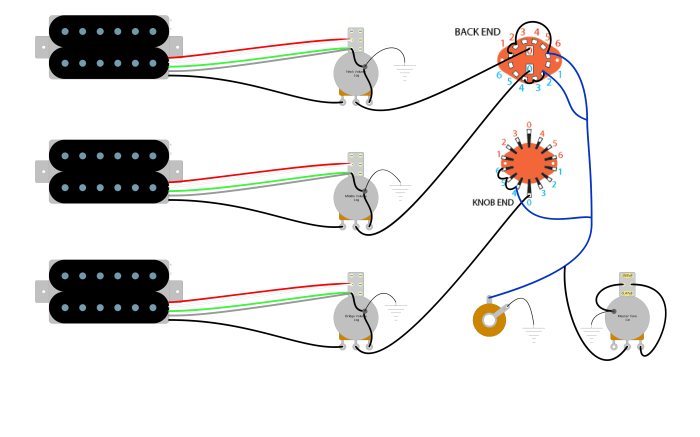
The wiring diagram of an electric guitar is a crucial aspect that determines its tonal characteristics and output. Different wiring configurations, involving various types of pickups and components, result in distinct sonic profiles. This section explores the common wiring diagrams used in electric guitars, highlighting their impact on the instrument’s sound.
Single-Coil Pickups
Single-coil pickups are renowned for their bright, twangy tone and are often associated with vintage guitars. They consist of a single coil of wire wrapped around a magnet. The wiring diagram for a single-coil pickup typically involves connecting the pickup’s output to the guitar’s volume and tone controls, and then to the output jack.
Humbucker Pickups
Humbucker pickups are designed to reduce the electromagnetic interference (hum) that is common in single-coil pickups. They achieve this by using two coils wired in opposite polarity, which cancels out the hum while reinforcing the desired signal. Humbucker wiring diagrams typically involve connecting the two coils in series or parallel, with each configuration offering different tonal characteristics.
P-90 Pickups
P-90 pickups are a hybrid design that combines elements of both single-coil and humbucker pickups. They offer a unique blend of brightness and warmth, with a slightly higher output than single-coils. The wiring diagram for a P-90 pickup is similar to that of a single-coil pickup, but with the addition of a capacitor to reduce high-end frequencies.
Modifications and Upgrades for Electric Guitars

Electric guitars, like any other musical instrument, can be modified and upgraded to enhance their sound, appearance, and playability. These modifications range from simple adjustments to major overhauls, and can significantly alter the character of the guitar. In this section, we will explore some common modifications and upgrades, discussing their benefits and drawbacks, and providing guidance on how to perform them safely.
Pickup Swaps
One of the most common modifications is swapping out the pickups. Pickups are responsible for converting the vibrations of the strings into electrical signals, and different pickups have different tonal characteristics. Swapping pickups can drastically change the sound of the guitar, allowing players to tailor it to their preferred genres and playing styles. Some popular pickup swaps include:
- Single-coil to humbucker: Humbuckers provide a thicker, warmer sound with less noise than single-coils, making them ideal for heavier genres like rock and metal.
- Humbucker to P-90: P-90s offer a vintage, bluesy tone that is brighter and more articulate than humbuckers.
- Active to passive pickups: Active pickups require a battery to operate and provide a hotter, more powerful output, making them suitable for high-gain playing.
Bridge Replacements
The bridge is another important component that can be upgraded to improve the guitar’s playability and tone. Different bridge types offer different levels of sustain, intonation, and string spacing. Some common bridge upgrades include:
- Fixed bridge to floating tremolo: Floating tremolos allow for expressive pitch bending and vibrato, but can be more difficult to keep in tune.
- Single-coil bridge to hardtail: Hardtail bridges provide increased sustain and stability, making them ideal for players who prefer a more traditional sound.
- Upgrade to a higher-quality bridge: Higher-quality bridges are made from better materials and offer improved intonation and sustain.
Neck Adjustments
The neck is a crucial part of the guitar that can be adjusted to improve playability and comfort. Common neck adjustments include:
- Truss rod adjustment: The truss rod is a metal rod that runs through the neck and can be adjusted to change the neck’s relief (the amount of curvature). This adjustment can prevent buzzing or fretting out.
- Fret leveling: Over time, frets can become uneven, causing buzzing or intonation problems. Fret leveling involves grinding the frets down to a uniform height.
- Neck shim: A neck shim is a thin piece of material that can be placed between the neck and body to change the neck angle. This adjustment can improve intonation and playability.
Playing Techniques for Electric Guitars

Electric guitars offer a vast array of playing techniques that allow guitarists to explore a diverse range of musical styles and create unique sonic landscapes. From the intricate fingerpicking patterns of blues and jazz to the soaring leads of rock and metal, each technique adds a distinct character to the music.
In this section, we will delve into the various playing techniques used on electric guitars, providing detailed explanations and demonstrations to help you master these techniques and expand your musical vocabulary.
Fingerpicking
Fingerpicking involves using the fingers of the picking hand to pluck the strings individually, creating intricate melodies and rhythmic patterns. This technique is commonly used in blues, folk, and classical guitar playing.
- Position: Rest the guitar on your lap or on a stand, with the neck tilted slightly upward.
- Picking Hand: Use your thumb and first three fingers to pluck the strings.
- Pattern: Experiment with different picking patterns to create unique melodies and rhythms.
Strumming, Diagram Of Electric Guitar
Strumming is a fundamental technique that involves using a pick to strike multiple strings simultaneously, creating a rhythmic foundation for the music. It is commonly used in rock, pop, and country guitar playing.
- Position: Hold the guitar in a comfortable position, with the strumming hand resting on the bridge.
- Picking Hand: Use a pick to strike the strings in a downward or upward motion.
- Rhythm: Practice different strumming patterns to create a variety of rhythmic grooves.
Lead Guitar
Lead guitar involves playing single-note melodies and solos over the rhythm section. This technique requires advanced finger dexterity and a deep understanding of music theory.
- Position: Hold the guitar in a similar position to strumming, but with the picking hand positioned higher up on the neck.
- Picking Hand: Use a pick or your fingers to pluck the strings individually.
- Techniques: Explore techniques such as bends, slides, and vibrato to add expression and emotion to your solos.
Final Wrap-Up
In conclusion, Diagram Of Electric Guitar serves as an invaluable resource for anyone seeking to unravel the mysteries of this beloved instrument. Its detailed explanations, illustrative diagrams, and practical insights empower readers to not only appreciate the guitar’s intricacies but also to harness its full potential.
Questions and Answers
What are the key differences between solid-body, semi-hollow, and hollow-body electric guitars?
Solid-body guitars offer a brighter, more focused sound with enhanced sustain, while semi-hollow guitars provide a warmer, more resonant tone with reduced feedback. Hollow-body guitars produce a rich, full sound with excellent acoustic projection.
How do different pickup configurations affect the sound of an electric guitar?
Single-coil pickups deliver a bright, twangy tone, humbuckers offer a thicker, warmer sound with reduced noise, and P-90 pickups provide a vintage-inspired tone with a balanced blend of clarity and warmth.
What are some common modifications that can be made to electric guitars?
Popular modifications include pickup swaps to alter the guitar’s tone, bridge replacements to enhance sustain or improve intonation, and neck adjustments to optimize playability and comfort.