
Welcome to the comprehensive guide to Scaffold Wood Planks, an indispensable component in various industries. This detailed exploration will delve into the types, applications, installation, maintenance, and innovations surrounding these vital planks, providing valuable insights for professionals and enthusiasts alike.
From construction sites to renovation projects, Scaffold Wood Planks play a crucial role in ensuring safety and efficiency. Join us as we uncover their versatility, proper handling techniques, and the latest advancements in this field.
Contents
Types of Scaffold Wood Planks

Scaffold wood planks are essential components of scaffolding systems, providing a stable and secure platform for workers to perform tasks at elevated heights. They are typically made from durable and lightweight wood species, such as Douglas fir, spruce, or pine, and are designed to withstand heavy loads and harsh weather conditions.
There are several types of scaffold wood planks available, each with its own unique characteristics and applications. The most common types include:
Dimensions and Weight Capacities, Scaffold Wood Planks
- Standard planks: These are the most commonly used type of scaffold plank, measuring 2 x 10 inches in cross-section and 10 feet in length. They have a weight capacity of up to 250 pounds per square foot.
- Wide planks: These planks are wider than standard planks, measuring 2 x 12 inches in cross-section. They have a weight capacity of up to 300 pounds per square foot.
- Long planks: These planks are longer than standard planks, measuring 12 feet in length. They have a weight capacity of up to 200 pounds per square foot.
Applications
- Standard planks: These planks are suitable for most general-purpose scaffolding applications, such as residential construction, painting, and maintenance.
- Wide planks: These planks are ideal for applications where extra stability is required, such as heavy-duty construction or industrial work.
- Long planks: These planks are used for scaffolding systems that require longer spans, such as bridges or tall buildings.
| Type | Dimensions | Weight Capacity | Applications |
|---|---|---|---|
| Standard | 2 x 10 inches x 10 feet | 250 pounds per square foot | General-purpose scaffolding |
| Wide | 2 x 12 inches x 10 feet | 300 pounds per square foot | Heavy-duty construction, industrial work |
| Long | 2 x 10 inches x 12 feet | 200 pounds per square foot | Scaffolding systems with longer spans |
Applications of Scaffold Wood Planks
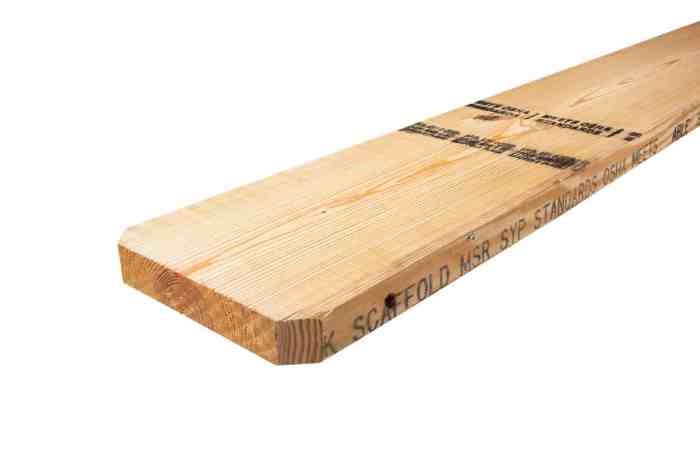
Scaffold wood planks are extensively utilized in various industries and applications, particularly in construction and renovation projects. These versatile planks offer numerous advantages, including their durability, stability, and ability to support heavy loads. Here are some specific examples of how scaffold wood planks are employed in different fields:
Construction
- Temporary platforms and walkways: Scaffold wood planks are used to create elevated platforms and walkways for workers to access different levels of a construction site, allowing them to work safely and efficiently.
- Support for scaffolding systems: These planks are used as a base for scaffolding structures, providing a sturdy and stable surface for workers to stand and work on.
- Formwork for concrete: Scaffold wood planks can be used to create formwork for concrete pours, ensuring the proper shape and dimensions of the concrete structure.
Renovation
- Temporary flooring: Scaffold wood planks can be used as temporary flooring during renovation projects, providing a safe and stable surface for workers to move around and access different areas.
- Protection for surfaces: These planks can be used to protect existing floors and surfaces from damage caused by heavy equipment or materials during renovation work.
- Support for equipment: Scaffold wood planks can be used to support heavy equipment and materials during renovation projects, ensuring their stability and preventing accidents.
Installation and Safety Considerations

Proper installation and adherence to safety guidelines are crucial for ensuring the stability and safety of scaffold wood planks. This section delves into the essential techniques and precautions to follow when working with scaffold wood planks.
Installation techniques involve proper spacing, bracing, and securing of planks. Safety guidelines encompass wearing appropriate gear, inspecting planks before use, and adhering to a checklist of safety precautions.
Proper Installation Techniques
- Spacing: Planks should be spaced evenly, typically 12-18 inches apart, to distribute weight and prevent sagging or tripping hazards.
- Bracing: Braces or ledgers should be used to support planks at regular intervals, typically every 6-8 feet, to prevent lateral movement and increase stability.
- Securing: Planks should be securely fastened to supports using nails, bolts, or other approved methods to prevent slippage or displacement.
Safety Guidelines
- Wear proper gear: Hard hats, safety glasses, and sturdy footwear should be worn to protect against falling objects and slips.
- Inspect planks before use: Planks should be inspected for cracks, splinters, or other damage that could compromise their integrity.
- Follow safety checklist: A checklist of safety precautions should be developed and followed before and during work on scaffolds.
Safety Checklist
- Inspect scaffold components for damage.
- Ensure planks are properly spaced, braced, and secured.
- Wear appropriate safety gear.
- Avoid overloading scaffolds.
- Maintain a clean and organized work area.
- Follow manufacturer’s instructions for scaffold use.
Maintenance and Inspection

Regular maintenance and inspection of scaffold wood planks are essential to ensure the safety and longevity of scaffolding structures. By following proper inspection and maintenance procedures, potential hazards can be identified and addressed, preventing accidents and ensuring the reliability of the scaffolding.
To effectively inspect scaffold wood planks, a systematic approach should be adopted. This involves examining the planks for any signs of damage, wear, or other issues that may compromise their structural integrity. A step-by-step guide for inspecting planks is provided below:
Visual Inspection
- Check for cracks: Examine the surface of the plank thoroughly, looking for any cracks or splits that may weaken the wood. Cracks can occur due to overloading, excessive bending, or exposure to harsh weather conditions.
- Inspect for knots: Loose or damaged knots can create weak points in the wood, reducing its load-bearing capacity. Pay attention to the size and condition of knots, and replace planks with excessively large or loose knots.
- Look for warping or twisting: Warped or twisted planks may not fit properly on the scaffolding, creating uneven surfaces or gaps. Inspect the planks for any signs of warping or twisting, and discard any planks that are significantly deformed.
- Examine for rot or decay: Rot or decay can weaken the wood and make it susceptible to breakage. Check for any discoloration, soft spots, or signs of fungal growth on the planks. Discard any planks that show signs of rot or decay.
5. Alternative Materials and Innovations

Wood planks have traditionally been the dominant material for scaffolding, but advancements in technology have led to the introduction of alternative materials that offer unique advantages. These include aluminum, steel, and composites.
Aluminum Planks
- Lightweight and easy to handle, reducing fatigue and improving productivity.
- Corrosion-resistant, making them suitable for outdoor use and harsh environments.
- Fire-resistant, providing an additional level of safety on construction sites.
- Durable and can withstand heavy loads.
Steel Planks
- Exceptionally strong and can support heavier loads than wood or aluminum planks.
- Highly durable and resistant to damage, providing a longer lifespan.
- Fire-resistant, enhancing safety on construction sites.
- Heavier than wood or aluminum planks, which can impact handling and transportation.
Composite Planks
- Combination of materials, such as wood fibers and polymers, providing a balance of strength and lightweight.
- Resistant to moisture, rot, and insects, increasing their durability and longevity.
- Can be engineered to have specific properties, such as anti-slip surfaces.
- May have higher material costs compared to traditional wood planks.
Innovations in Wood Planks
Recent innovations have also focused on improving the performance and safety of wood planks:
- Lightweight designs: Utilizing advanced wood treatment techniques and optimized cross-sections to reduce weight without compromising strength.
- High-strength designs: Incorporating engineered wood products and advanced adhesives to enhance load-bearing capacity.
- Anti-slip surfaces: Applying specialized coatings or textures to reduce the risk of slips and falls.
Summary: Scaffold Wood Planks

In conclusion, Scaffold Wood Planks are a versatile and essential tool in various industries, offering durability, safety, and adaptability. Understanding their types, applications, and maintenance guidelines is paramount for ensuring optimal performance and longevity. As technology continues to evolve, we can expect further innovations in Scaffold Wood Planks, enhancing their capabilities and safety features. Embrace the knowledge gained from this guide to make informed decisions and elevate your projects to new heights.
FAQ Overview
What are the different types of Scaffold Wood Planks available?
Scaffold Wood Planks come in various types, including standard planks, laminated planks, and treated planks. Standard planks are commonly used for general construction purposes, while laminated planks offer increased strength and durability. Treated planks are designed to resist moisture and decay, making them suitable for outdoor applications.
How do I ensure the safety of Scaffold Wood Planks?
To ensure safety, Scaffold Wood Planks should be regularly inspected for damage or wear. Proper installation techniques, such as spacing, bracing, and securing, are crucial. Additionally, adhering to safety guidelines, such as wearing appropriate gear and following established load limits, is essential.
What are the advantages of using Scaffold Wood Planks compared to other materials?
Scaffold Wood Planks offer several advantages over other materials. They are relatively lightweight, making them easy to handle and transport. Wood is a natural insulator, providing a comfortable working surface. Additionally, wood planks are cost-effective and readily available, making them a practical choice for various projects.


