Delving into the intricacies of the Fuse Box Honda Accord 2003, this guide unveils a world of electrical know-how. With precision and clarity, it unravels the mysteries of fuse box location, diagram, common issues, specifications, and safety precautions, empowering readers to navigate the electrical landscape of their Accord with confidence and expertise.
Contents
Fuse Box Location and Identification
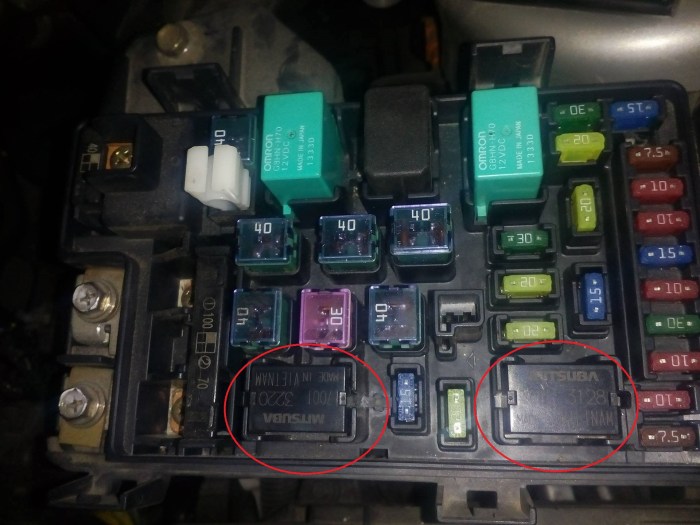
The fuse box in the 2003 Honda Accord is conveniently located in two separate compartments for easy access and maintenance.
Under the Hood Fuse Box:
- Open the hood and locate the fuse box near the battery.
- It is a black plastic box with a clear cover that allows you to see the fuses inside.
- The cover will have a diagram that identifies the location and purpose of each fuse.
Interior Fuse Box:
- Open the driver’s side door and locate the fuse box on the lower left side of the dashboard.
- It is a small, rectangular box with a black cover.
- The cover will have a diagram that identifies the location and purpose of each fuse.
Fuse Box Diagram and Layout: Fuse Box Honda Accord 2003
The fuse box in the 2003 Honda Accord comprises multiple fuse panels, each responsible for protecting specific electrical circuits within the vehicle. Understanding the diagram and layout of these panels is crucial for troubleshooting electrical issues and ensuring the proper functioning of various components.
The fuse box is strategically located within the engine compartment, typically near the battery. It consists of two primary fuse panels: the under-hood fuse panel and the interior fuse panel. The under-hood fuse panel houses fuses that protect circuits related to engine and vehicle operation, while the interior fuse panel contains fuses for accessories and interior components.
Under-Hood Fuse Panel
The under-hood fuse panel is usually black or gray and is mounted in the engine compartment. It comprises several rows of fuses, each labeled with a specific amperage rating and corresponding function. The fuse diagram, typically printed on the underside of the panel cover, provides a detailed guide to each fuse’s location and purpose.
- Main Fuse: Located in the center of the panel, the main fuse protects the entire electrical system from excessive current draw.
- Engine Control Unit (ECU) Fuse: This fuse safeguards the ECU, which controls the engine’s operation.
- Fuel Pump Fuse: Protects the fuel pump from electrical damage, ensuring a steady fuel supply to the engine.
- Ignition Fuse: Provides power to the ignition system, enabling the engine to start.
Interior Fuse Panel
The interior fuse panel is typically located beneath the dashboard, on the driver’s side. It houses fuses that protect circuits related to interior components and accessories, such as the radio, power windows, and interior lights.
- Radio Fuse: Protects the car’s audio system from electrical surges.
- Power Window Fuse: Ensures the proper functioning of the electric power windows.
- Interior Light Fuse: Provides power to the interior lights, illuminating the cabin.
- Accessory Fuse: Protects various accessories, such as the cigarette lighter and power outlets.
Common Fuse Issues and Troubleshooting

Fuses are essential components in the electrical system of a vehicle, including the 2003 Honda Accord. They protect the electrical system from damage caused by overcurrent or short circuits. However, fuses can sometimes fail, leading to various electrical issues.
Fuse Failure and Troubleshooting, Fuse Box Honda Accord 2003
Fuse failure can manifest in several ways, including blown fuses, intermittent electrical problems, or complete loss of power. To troubleshoot fuse issues, follow these steps:
- Locate the fuse box: Refer to the Fuse Box Location and Identification section for guidance.
- Inspect the fuses: Visually inspect each fuse for any visible damage or breaks in the wire.
- Use a fuse tester: If visual inspection does not reveal any issues, use a fuse tester to determine if the fuse is blown.
- Replace blown fuses: If a fuse is blown, replace it with a new fuse of the same amperage rating.
- Check for underlying electrical issues: If replacing a blown fuse does not resolve the electrical problem, there may be an underlying electrical issue that requires further diagnosis.
Fuse Specifications and Replacement

Fuse boxes protect electrical circuits in your Honda Accord by interrupting the flow of electricity when it exceeds a safe level. Each fuse is designed to handle a specific amperage, and using the correct fuse type and amperage is crucial for the proper functioning and safety of your vehicle’s electrical system.
The 2003 Honda Accord uses a combination of blade-type and cartridge-type fuses. Blade-type fuses are flat and rectangular, while cartridge-type fuses are cylindrical. The amperage rating of each fuse is printed on its top.
Fuse Amperage and Types
- 5-amp (A): Brown
- 7.5-amp (A): Orange
- 10-amp (A): Red
- 15-amp (A): Blue
- 20-amp (A): Yellow
- 25-amp (A): Clear
- 30-amp (A): Green
- 40-amp (A): Pink
- 50-amp (A): Gray
- 60-amp (A): White
- 70-amp (A): Violet
- 80-amp (A): Brown
Using a fuse with a higher amperage rating than specified can lead to circuit damage and potential fire hazards. Conversely, using a fuse with a lower amperage rating may cause the fuse to blow prematurely, leaving the circuit unprotected.
Safety Precautions and Maintenance

Working with electrical components like fuse boxes requires utmost caution. To ensure safety and prevent damage, adhere to the following guidelines:
– Always disconnect the battery: Before handling the fuse box, disconnect the negative terminal of the battery to eliminate any electrical current.
– Use proper tools: Employ insulated tools specifically designed for electrical work to minimize the risk of shocks or short circuits.
– Inspect regularly: Periodically inspect the fuse box for signs of damage, corrosion, or loose connections. If any issues are detected, address them promptly.
– Replace blown fuses correctly: When replacing blown fuses, use only fuses with the correct amperage rating. Never substitute fuses with higher amperage, as this can lead to electrical hazards.
– Keep the fuse box clean: Dirt and debris can accumulate over time, potentially causing electrical problems. Regularly clean the fuse box using a soft brush or compressed air to remove any contaminants.
Fuse Box Maintenance
Regular maintenance is crucial for optimal fuse box functionality. Consider the following steps:
– Tighten connections: Over time, connections within the fuse box can become loose due to vibrations or temperature changes. Periodically check and tighten all connections to ensure proper electrical flow.
– Lubricate terminals: Applying a small amount of dielectric grease to the fuse terminals can help prevent corrosion and improve electrical conductivity.
– Replace old fuses: Fuses have a limited lifespan and should be replaced periodically, even if they have not blown. This helps prevent unexpected failures and ensures the fuse box operates reliably.
Final Conclusion

In conclusion, the Fuse Box Honda Accord 2003 stands as a testament to the intricate symphony of electrical components that orchestrate the vehicle’s performance. Understanding its location, function, and troubleshooting techniques empowers owners to maintain optimal electrical health, ensuring a smooth and reliable driving experience.
Essential FAQs
Where is the fuse box located in a 2003 Honda Accord?
The fuse box is situated beneath the dashboard, on the driver’s side.
How do I identify a blown fuse?
A blown fuse will have a broken filament, visible through the transparent casing.
What is the purpose of the fuse box?
The fuse box protects electrical circuits from damage caused by power surges or short circuits.